
Blog
The German Cockroach Dossier

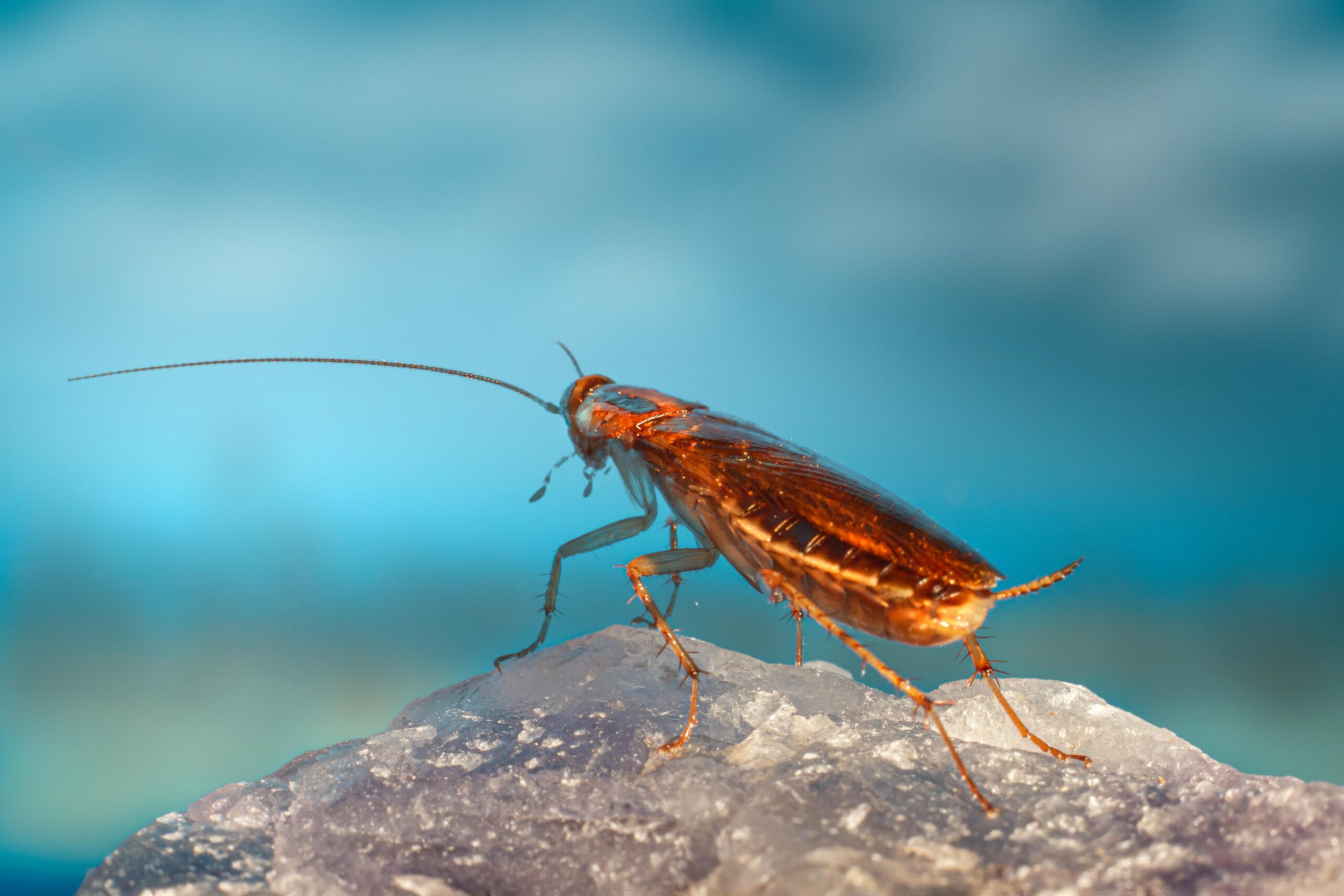
The German cockroach (Blattella germanica) is arguably the most pervasive and problematic structural pest in the built environment. While colloquially known as the “croton bug,” this species is an obligate associate of human structures, having followed global trade and migration routes for over 2,100 years. This dossier provides an expert-level analysis of its biology, the evolutionary mechanisms of its resistance, and the integrated strategies required for successful eradication.
——————————————————————————–
I. Evolutionary History and Species Differentiation
Contrary to its name, recent genetic research indicates that the German cockroach originated in South or Southeast Asia, diverging from the Asian cockroach (Blattella asahinai) slightly over two millennia ago. Its sensitivity to cold reflects its tropical origins, necessitating its reliance on climate-controlled human dwellings for survival in temperate regions.
Differentiating German and Asian Cockroaches
In regions such as the southeastern United States, misidentification between these two nearly identical species often leads to treatment failure.
• German Cockroach: Strictly an indoor pest found in kitchens, bathrooms, and crevices. It is a poor flier, though it may glide when disturbed. It typically “hitchhikes” into homes via furniture, groceries, or shared walls.
• Asian Cockroach: Primarily an outdoor inhabitant of mulch, leaf litter, and gardens. It is a strong flier and often enters homes through open doors or windows, attracted by light.
Physical Characteristics
The German cockroach is a small species, measuring approximately 1.1 to 1.6 cm. It is distinguished by two dark, roughly parallel streaks on its pronotum, running from behind the head to the base of the wings.
——————————————————————————–
II. Biology of Proliferation: The Lifecycle
The German cockroach reproduces faster than any other residential species. It undergoes incomplete metamorphosis (hemimetabolous development) consisting of three stages: egg, nymph, and adult.
1. Egg Stage: Females produce an egg case called an ootheca, which is roughly 8mm long and contains 30 to 50 eggs. Unlike other species, the German female carries the ootheca at the tip of her abdomen until approximately 24 hours before hatching, ensuring optimal environmental conditions for the embryos.
2. Nymphal Stage: Upon emergence, nymphs go through five to seven instars (molts). Development is accelerated by physical contact with other colony members within aggregation sites.
3. Adult Stage: Under ideal conditions (25–30 °C), the cycle from egg to reproductive adult is completed in roughly 50 to 60 days.
——————————————————————————–
III. Behavioral Ecology: Aggregation and Foraging
The species is thigmotactic, preferring confined spaces, and nocturnal, though daylight sightings may indicate overpopulation.
The Social Nexus: Coprophagy and Necrophagy
Aggregation is driven by fecal pheromones containing over 40 chemical cues that attract all life stages to a central “harborage”. This behavior facilitates several survival strategies:
• Coprophagy: Early-instar nymphs, which are less mobile, consume the feces of adults to acquire essential nutrients and establish their gut microbiome.
• Necrophagy: They are “expert recyclers” that consume dead colony members, a behavior that allows for secondary kill in baiting programs.
——————————————————————————–
IV. Evolutionary Resistance and Glucose Aversion (GA)
The German cockroach possesses a 2.0 Gb genome with a high number of chemoreceptors, allowing it to detect and adapt to toxins. It has developed resistance to 42 active ingredients across most major insecticide groups.
Behavioral Resistance: The Bitter Taste of Success
A significant evolutionary shift known as glucose aversion (GA) has emerged in multiple field populations. In GA roaches, the peripheral gustatory system has changed so that glucose tastes bitter rather than sweet. This causes them to shun baits that use glucose as a phagostimulant. Furthermore, GA males have had to adapt their nuptial gift (sugary secretions used in mating) to contain more complex sugars, as GA females often reject standard “sweet” gifts.
——————————————————————————–
V. Public Health and Epidemiological Risks
German cockroaches are mechanical vectors for pathogens such as Salmonella, picked up while foraging in decaying organic matter or trash. More critically, they produce potent allergens, primarily proteins BlaG 1 and BlaG 2. Found in saliva, feces, and shed skins, these allergens are present in 78% to 98% of urban homes and are major triggers for chronic asthma and sinus infections.
——————————————————————————–
VI. Integrated Pest Management (IPM) Protocols
Effective control requires a comprehensive, systematic approach, as the survival of just a few eggs can regenerate a population.
Chemical Interventions
• Gel Baiting: Professional-grade products (e.g., Advion, Vendetta) should be applied in tiny, pea-sized beads (1–4 mm) near harborage sites like hinges, motor housings, and cracks.
• Insect Growth Regulators (IGRs): Compounds like Gentrol (hydroprene) or Tekko (pyriproxyfen) disrupt the lifecycle by preventing molting, egg-hatching, or sexual maturation.
• Bait Rotation: Rotating baits with different modes of action and attractants is essential to combat chemical resistance and glucose aversion.
Sanitation and Exclusion
• Sanitation: Eliminating competing food and water sources forces roaches to feed on baits.
• Structural Barriers: In multi-unit housing, sealing wall voids with caulk and using vent filters or drain plugs at night prevents migration between apartments.